July 27, 2026
How to Start an Antique Jewelry Collection (Without Getting Burned)
Filed under Buying GuidesCollecting & Value
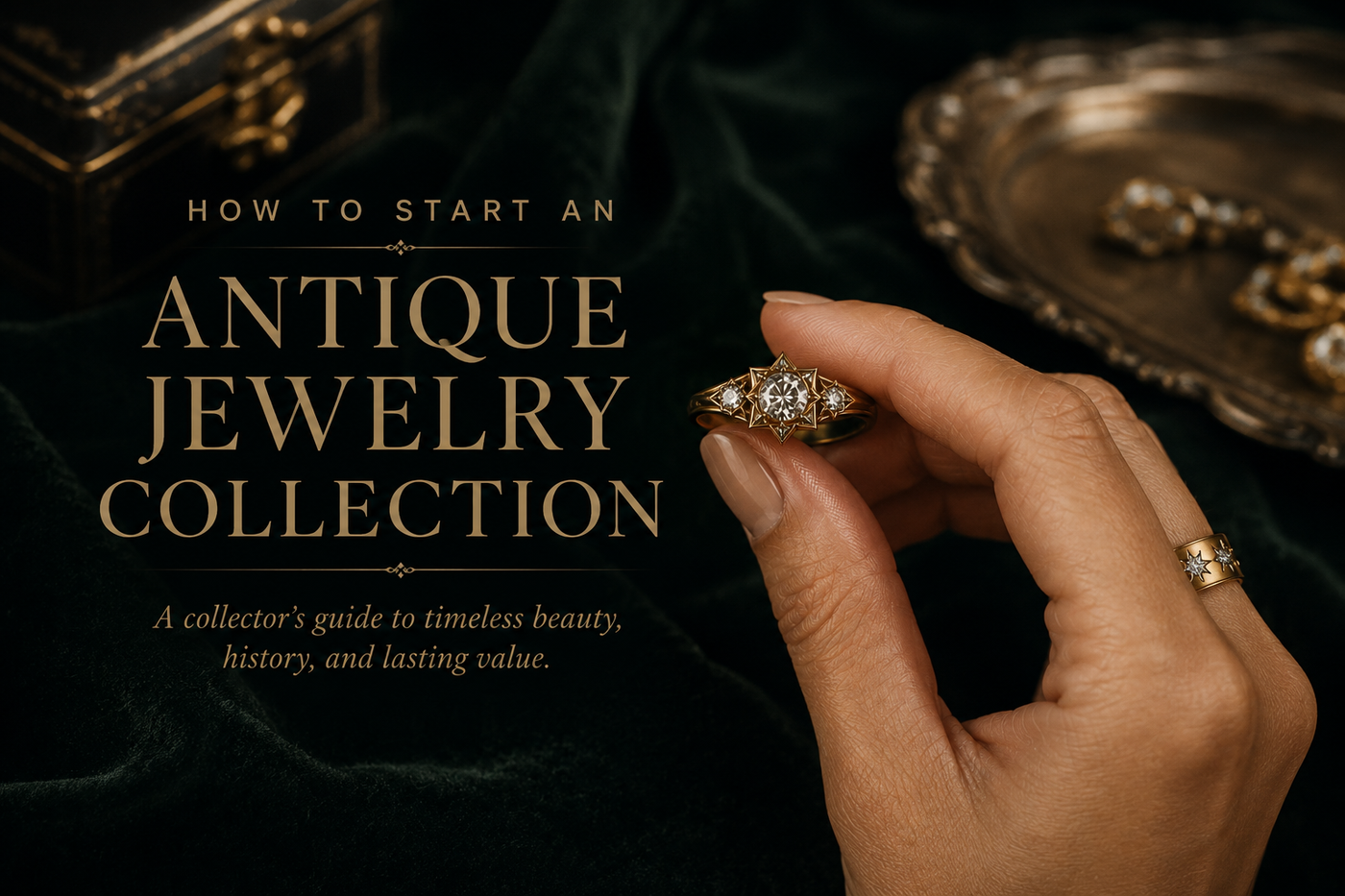
Most people start collecting antique jewelry the expensive way: they buy first and learn second. Every collector has a drawer of early mistakes that taught them what a book could have. Here's how to skip a few of those.
Learn the eras before you learn the prices
You can't judge value in a language you don't speak. Before you spend anything real, get fluent in the eras — Georgian, Victorian, Edwardian, Art Deco, Retro. Learn what each looked like and why: the metals available, the cuts that existed, the motifs that repeat. Museums, auction previews, a few good books, and dealers who like to talk will get you there faster than scrolling listings. The goal isn't trivia. It's being able to look at a piece and know, roughly, when and where it's telling you it's from — and whether it's telling the truth.
Buy the best single piece you can afford, not the most pieces
One genuinely good piece will teach you more, and hold its value better, than five mediocre ones. Quality is remembered long after price is forgotten. Stretch for the better example, the finer stone, the cleaner condition — and buy less often. A small collection of real things beats a big collection of almost-things every time.
Learn to read a hallmark
The tiny stamps inside a band or on a clasp are the piece telling you its own story — metal, maker, sometimes the year and city. Learning to read them is the single most useful skill a new collector can build, because it's how you separate what a piece claims from what it can prove. If a seller can't point them out or explain them, that tells you something too. We break the marks down in our guide to reading hallmarks.
Ask "how do you know," not just "how old is it"
Anyone can state an age. A good dealer can support it — construction, wear patterns, hallmarks, provenance. Ask about repairs, replaced stones, and re-cutting. None of those are automatically dealbreakers, but they change what a piece is worth, and a straight answer tells you the seller is honest.
Treat condition as part of the value
Age is not the same as good condition, and condition is money. A worn-thin shank, a replaced stone, a re-cut gem, heavy old solder repairs — all of it matters. Original, honest condition commands a premium for a reason. Learn to look for it.
Find one dealer you trust, and stay
The best thing a new collector can own isn't a piece — it's a relationship. A dealer who knows what you love, brings you the right things first, and tells you when to pass is worth more than any single purchase. Collecting well is a long game played with people, not a series of transactions. That's the whole idea behind how we work at ZHIVA: no order is the end of anything. It's the start of a collection built together, over years.
That relationship runs through everything we do — from sourcing a piece you've been searching for to designing a bespoke commission.
— Sasha, ZHIVA
One of One
Now go find yours.
Every ZHIVA piece is antique, vintage, or built from the stone up — and there is only ever one of each.
Keep Reading

How to Tell If a Van Cleef & Arpels Alhambra Is Real
How to tell if a Van Cleef & Arpels Alhambra is real: the perlée border, stone fit, clasp,...
Read more
Vintage Tiffany & Co. Jewelry: How to Date It, Authenticate It, and What's Worth Buying
How to read vintage Tiffany jewelry marks, tell real from fake (including Return to Tiffany), why gold pieces...
Read more
What $3,000, $5,000 and $10,000 Buys in an Antique Engagement Ring
An honest guide to antique engagement ring cost: the realistic trade-offs at $3,000, $5,000 and $10,000, where value...
Read more